
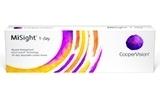
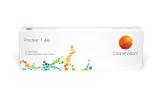
MiSight® 1 day 每日即棄兒童近視控制隱形眼鏡

可減慢兒童近視加深的每日即棄軟性隱形眼鏡*1

替換周期

  • 每日更換

矯正

  • 兒童近視

MiSight® 1 day 每日即棄兒童近視控制隱形眼鏡

MiSight® 1 day每日即棄兒童近視控制隱形眼鏡,是全球唯一及首個獲美國FDA認證的軟性隱形眼鏡 †‡ ,證實從8至12歲開始使用,有效減緩近視加深。2 MiSight® 每日即棄隱形眼鏡,採用 ActivControl® Technology,減慢孩子近視的發展,幫助他們提供清晰視力,讓孩子享受生活。 §2-5 

近視不僅僅是視力模糊,它是一種累進而不可逆轉的疾病,通常會隨著孩子的成長而惡化6。全球近三分之一的兒童患有近視,如果不加以矯正,可能會導致他們難以學習、影響成績、並減少參與運動和日常活動。| 7-13

隨著兒童近視程度的加深,他們日後患上危及視力疾病的風險也會增加, 包括視網膜脫落、近視黃斑病變、青光眼和白內障。14-17

特色與優點

  • 經測試證實,有效減慢近視加深速度約50% ¶ ** 1,18
  • 幾乎適用於所有近視兒童**18
  • 任何年齡的兒童開始治療後,均可見效 (8歲以上) ††1
  • 比有框眼鏡更受兒童歡迎19
  • 兒童友好,容易佩戴2
  • 隱形眼鏡令孩子對外表變得自信,同時改善社交生活4

ActivControl® Technology

MiSight® 1 day使用的ActivControl® Technology具有雙重作用,既能提供清晰視野,又能有助控制近視加深速度2

不確定哪種隱形眼鏡最適合您?

在這個測驗中回答4道問題,找出最適切合您需要的鏡片。

尋找您的鏡片

包裝圖片僅供參考。

塑膠重量定義為參與計劃的CooperVision 軟性隱形眼鏡產品的塑膠重量,包括吸塑膠殼、鏡片和外層包裝塑膠,包含層壓材料、黏合劑和輔助劑 (例如墨水)。不包括這些產品及其包裝在製造過程中使用的塑膠。‡‡ 20 

FDA, Food and Drug Administration * Using measured and modeled data, pooled across ages (8-17), MiSight® 1 day slowed myopia progression by an average of approximately 50%.
† Compared to a single vision 1 day lens over a 3-year period.
‡ Indications for use: MiSight® 1 day (omafilcon A) soft (hydrophilic) contact lenses for daily wear are indicated for the correction of myopic ametropia and for slowing the progression of myopia in children with non-diseased eyes, who at the initiation of treatment are 8-12 years of age and have a refraction of -0.75 to -4.00 diopters (spherical equivalent) with ≤ 0.75 diopters of astigmatism. The lens is to be discarded after each removal.
§ In clinical study, mean weekday wear time increased from 12.8 hours/day at 6-months to 13.9 hours/day at 6-years with a mean of >6.5 days/week.
| Based on a comprehensive analysis of 276 studies, involving a total of 5,410,945 children and adolescents with spherical equivalent of -0.50D or less, aged 6-19 from across 50 countries, with notable variations in prevalence across different demographic groups.]
¶ Using measured and modeled data, pooled across ages (8-17), MiSight® 1 day slowed myopia progression by an average of approximately 50%.
** 90% of myopic eyes respond to MiSight® 1 day treatment; ages 11-15 at initiation of treatment, n=90.
†† Children with myopia fit with MiSight® 1 day contact lenses ages 8-15 continued to experience slowed myopia progression as long as they remained in treatment.
‡‡ Plastic used in participating CooperVision soft contact lens products is determined by the weight of plastic in the blister, the lens, and the secondary package, including laminates, adhesives, and auxiliary inputs (e.g. ink). The determination does not include plastic used during the manufacturing process for both these products and their packaging.

References:
1. Arumugam B et al. Modelling Age Effects of Myopia Progression for the MiSight 1 day Clinical Trial. IOVS. 2021;62(8):2333.
2. Chamberlain P, et al. A 3-year randomized clinical trial of MiSight® lenses for myopia control. OVS 2019; 96(8):556-567.
3. CVI data on file 2025.
4. Walline J, et al. Randomized trial of the effect of contact lens wear on self-perception in children. Optom Vis Sci. 2009 Mar;86(3):222-32.
5. Woods J et al. Ocular health of children wearing daily disposable contact lenses over a 6-year period. CLAE 2021 Aug;44(4):101391.
6. K. Zadnik, G.L. Mitchell, L.A. Jones, D.O. Mutti; Factors Associated with Rapid Myopia Progression in School-aged Children . Invest. Ophthalmol. Vis. Sci. 2004;45(13):2306
7. Liang J, Pu Y, Chen J, et al, Global prevalence, trend and projection of myopia in children and adolescents from 1990 to 2050: a comprehensive systematic review and meta-analysis, British Journal of Ophthalmology, Published Online First: 24 September 2024.
8. Ma X, Zhou Z, Yi H, Pang X, Shi Y, Chen Q, Meltzer ME, le Cessie S, He M, Rozelle S, Liu Y, Congdon N. Effect of providing free glasses on children's educational outcomes in China: cluster randomized controlled trial. BMJ. 2014 Sep 23;349:g5740.
9. Jan C, Li S, Kang M, et al. Association of visual acuity with educational outcomes: a prospective cohort study. British Journal of Ophthalmology 2019;103:1666-1671.
10. Yadav R, et al. Vision Related Quality of Life, Sports Activities and Academic Performance Among Myopic School Going children: A Cross Sectional Study. African Journal of Biomedical Research 2024; 27(1S), 2228-2231.
11. Sankaridurg P, Tahhan N, Kandel H, et al. IMI Impact of myopia. Invest Ophthalmol Vis Sci. 2021;62(5):2. pg 6
12. Shams N, Mobaraki H, Kamali M, Jafarzadehpour E. Comparison of quality of life between myopic patients with spectacles and contact lenses, and patients who have undergone refractive surgery. J Curr Ophthalmol. 2015 Nov 17;27(1-2):32-6.
13. Pan C-W, Ramamurthy D & Saw S-M. Worldwide prevalence and risk factors for myopia. Ophthalmic Physiol Opt 2012, 32, 3-16.
14. Xu L et al. High myopia and glaucoma susceptibility, the Beijing Eye Study. Ophthalmology. 2007;114(2):216-20.
15. Flitcroft DI. The complex interactions of retinal, optical and environmental factors in myopia aetiology. PRER 2013;31(6):622-60.
16. Younan C, et al. Myopia and incident cataract and cataract surgery: the blue mountains eye study. IVOS 2002;43(12):3625-3632.
17. Chen SJ, et al. Prevalence and associated risk factors of myopic maculopathy in elderly Chinese: the Shihpai eye study. IOVS 2012;53(8):4868-73
18. Chamberlain P, et al. Long-term Effect of Dual-focus Contact Lenses on Myopia Progression in Children: A 6-year Multicenter Clinical Trial. OVS 2022 Mar 1;99(3):204-212.
19. Lumb E, et al. Six years of wearer experience in children participating in a myopia control study of MiSight® 1 day. CLAE 2023; 46(4): 101849.
20. CVI data on file, 2024.

SA14928/ APP148186