
Thoughtful choices for positive change*1

At CooperVision, we know that sustainability is a journey—one we’re committed to through purpose, innovation, and action.

Built on years of innovation, our MADE BETTERTM Promise is about making smarter, more sustainable choices for our participating contact lenses.*1 It reflects the work we do each day, the progress we’ve made, and our ongoing dedication to a brighter future - for People + Planet.

Our MADE BETTERTM Promise comes to life in the products it backs. Thoughtful choices—designed to drive positive change—are woven throughout their life.*†1 From the packaging materials we use, to how we make our products, to offsetting a portion of plastic waste for the products we sell, we are taking meaningful steps toward more sustainable contact lens innovation.*†‡1,2

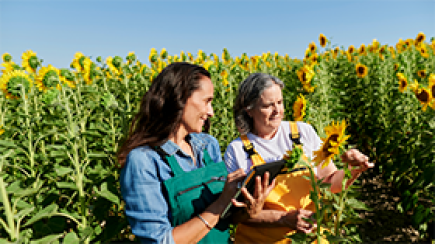
For products backed by our MADE BETTERTM Promise, we start by thoughtfully selecting packaging materials to reduce our impact from the very beginning.§1

We work closely with our suppliers to discover and use lower-carbon, responsibly sourced raw materials in their packaging.◊1

Starting with our MyDay® range of products:

  • We're proud to be the first and only contact lens manufacturer to use ISCC PLUS-certified plastic in product packaging.¶**3 ISCC PLUS-certified materials are produced in an environmentally, socially and economically sustainable manner, with full traceability and verification.¶3,4
  • We also use lower-carbon aluminum foil lidding for blister packs.††‡‡5

Our MADE BETTERTM products are created using manufacturing processes intentionally designed to reduce our carbon footprint.◊◊¶¶***8

By leveraging next-generation technologies, we’re able to make products efficiently—while reducing waste and improving resource use.†††9 At our manufacturing sites for these products, we recycle over 90% waste, helping conserve natural resources.‡‡‡6 and use lower-carbon energy where possible to help reduce our impact.§§§10

To help address the possible impact of our MADE BETTERTM products, we offset a portion of our plastic footprint through our plastic neutrality program.2

In partnership with Plastic Bank, we help remove plastic waste from nature—while creating positive social impact for individuals and communities facing socioeconomic challenges. Through these efforts, we turn waste into opportunity.†◊◊◊1

We led the way as the first contact lens manufacturer to offer a range of plastic neutral contact lenses.¶¶¶11 To date, our plastic neutrality program has supported the collection and recycling of over 622 million plastic bottles from coastal areas where plastic pollution is prevalent – and counting.****12

A Promise for the Future 

While our collective actions to date have allowed us to offer select contact lens products with reduced carbon impact, the work we’re doing today is just the beginning.§††††‡‡‡‡10 Our MADE BETTERTM Promise reflects our commitment to advancing sustainability through tomorrow’s innovations and meaningful action. Driven by a passion for continuous improvement, we’re building on a legacy of progress—with purpose.*1

At CooperVision, we know that creating a better future starts with the choices we make today. Through our MADE BETTERTM Promise, we’re working hand-in-hand with our customers, partners, and communities to help drive meaningful change—for People + Planet.*§§§§10 Together, we’re helping to build a brighter tomorrow, one thoughtful action at a time.*1

Explore more and see how we're taking steps towards a brighter tomorrow.

* CooperVision’s MADE BETTERTM program has introduced lower-carbon inputs with traceable sourcing - including ISCC PLUS-certified, lower-carbon plastic and lower-carbon aluminum - into the primary packaging of the MyDay® range of products. It also refers to process improvements that have reduced waste, improved energy efficiency, and lowered greenhouse gas emissions during production of the MyDay® range of products. Methods and verification information are available at coopervision.com/sustainability/methods.
† Through its partnership with Plastic Bank, CooperVision offsets a portion of its plastic footprint by funding the collection and recycling of plastic waste, equivalent in weight to the plastic used in participating soft contact lens products sold in participating countries, gathered within 30 miles of oceans or waterways in countries where Plastic Bank operates. Plastic weight is based on the total weight of plastic in the lens, blister, and secondary packaging, including laminates, adhesives, and auxiliary inputs (e.g. ink). This does not include plastic used during the manufacturing process.
‡ Plastic used in participating CooperVision soft contact lens products is determined by the weight of plastic in the blister, the lens, and the secondary package, including laminates, adhesives, and auxiliary inputs (e.g. ink). The determination does not include plastic used during the manufacturing process for both these products and their packaging.
§ CooperVision’s MADE BETTER™ program has introduced lower-carbon inputs with traceable sourcing - including ISCC PLUS-certified, lower-carbon plastic and lower-carbon aluminum - into the primary packaging of the MyDay® range of products. Methods and verification information are available at coopervision.com/sustainability/methods.
◊ “Works with its suppliers" refers to CooperVision's ongoing processes to evaluate and, where available, introduce lower-carbon inputs and traceable sourcing for contact lens blister pack components. Where applicable, independent third-party verification is conducted to international standards, including ISO 14067 (product carbon footprint) and ISO 22095 (chain of custody). Applicability, verification status, and the extent of greenhouse-gas emission reductions vary by input, geography, and time.
¶ “Packaging” refers to the blister pack that directly encloses each contact lens - the plastic tray sealed with an aluminum foil lid.
** Determination is based on a review of the ISCC PLUS public certificate database and publicly available information. ISCC PLUS certificates are issued at supplier/site level and may not identify downstream brands. As of November 6, 2025, no other contact lens manufacturers were identified as using ISCC PLUS certified plastic. For the stated period, CooperVision's internal documentation with SCS Global Services shows that 100% of the polypropylene used for MyDay® blister packs was allocated to ISCC PLUS certified input; certification does not imply physical segregation.
†† Applies only to the reduction in average greenhouse gas emissions, expressed as carbon dioxide equivalent (CO₂e), associated with the aluminum foil stock used to produce the contact lens lidding material for the MyDay® range of products, as determined through mass balance accounting. In 2025, CooperVision transitioned to sourcing lidding material made with aluminum foil stock calculated to have lower average associated emissions than the foil stock previously used. According to CooperVision’s supplier, this lower-carbon aluminum has associated emissions of ≤ 5.5 kg carbon dioxide equivalent (CO₂e) per kg, compared to the conventional European-average primary aluminum baseline (8.7 kg CO₂e per kg aluminum), indicating a reduction in emissions for the aluminum component. The partial product carbon footprint calculation methodology of the supplier of the aluminum has been verified by an independent third party as compliant with the following standards: GHG Protocol Product Standard, ISO 14067, and ISO 14026.
‡‡ Referenced product inputs are produced and tracked under a mass balance chain-of-custody model, in line with ISO 22095:2020. Further methodology and verification information are available at coopervision.com/sustainability/methods.
§§ CooperVision's plastic supplier has found that manufacturing polypropylene (PP) plastic using biobased inputs reduced greenhouse gas emissions by 2.3 kg CO2e/kg PP compared to conventional fossil-based inputs.
◊◊ Refers to continuous manufacturing improvement processes undertaken by CooperVision to increase efficiency.
¶¶ Carbon footprint is limited to Scope 1 and 2 emissions, defined as: Scope 1 emissions are direct emissions from owned or controlled sources. Scope 2 emissions are indirect emissions from the generation of purchased energy.
*** CooperVision's 2021 and 2022 Environmental, Social, and Governance Reports.
††† CooperVision’s MADE BETTERTM Promise program has implemented process improvements that have reduced waste, improved energy efficiency, and lowered greenhouse gas emissions during production of the MyDay® range of products. Methods and verification information are available at coopervision.com/sustainability/methods.
‡‡‡ SCS Global Services Certificate No. SCS-ZW-0018 verifies a recycling rate of 94.7% for the Juana Díaz, PR facility. SCS Global Services is an international leader in third-party certification, validation, and verification for environmental sustainability. CooperVision's internal records demonstrate an average recycling rate of over 90% for its MyDay® manufacturing facilities in the UK.
§§§ The MyDay® range of products are manufactured at two facilities that use lower-carbon energy sources. At CooperVision’s Juana Díaz, Puerto Rico site, combined heat and power (CHP) technology generates electricity and thermal energy more efficiently than conventional grid-supplied electricity and separate heating systems. Based on CooperVision’s scope 1 and scope 2 emissions data, total greenhouse gas emissions per manufactured lens at this facility in 2024 were approximately 30% lower than in 2021, prior to CHP startup. At its manufacturing facilities in the UK, CooperVision purchases 100% renewable energy.
◊◊◊ Eligible Plastic Bank collectors receive support through CooperVision's funding of Plastic Bank programs, which may include access to vision care, grocery vouchers, and other essentials.
¶¶¶ Range defined as all 1 day brands and segments: sphere, toric and multifocal.
**** CooperVision, through its collaboration with Plastic Bank, has collected and converted approximately 12.4M kg of plastic destined for waterways as of December 2025. Using Plastic Bank's metric of 1kg of plastic equaling 50 standard 202mm bottles, that will be the equivalent of approximately 622M plastic bottles.
†††† Results compare 2024 with a 2021 baseline. Full life cycle assessment has been conducted in accordance with ISO 14067 and verified through independent critical review from a cradle-to-grave basis, which covers all product stages from raw material extraction to end-of-life. Details on methodology and verification are available at coopervision.com/sustainability/methods.
‡‡‡‡ ‘Carbon reduction’ and/or ‘lower carbon’ refer to a reduction in total greenhouse gas emissions, expressed as carbon dioxide equivalent (CO2e). No carbon offsets are used.
§§§§ As of October 3, 2025, more than 7,000 Plastic Bank collection members across 500+ communities in Indonesia, Egypt, and the Philippines have exchanged collected plastic waste for income and life-improving benefits (such as insurance, digital connectivity, grocery vouchers, and school supplies) through CooperVision's plastic neutrality program with Plastic Bank, cumulative since January 2021.

References:
1. CVI data on file, 2023-2025. 
2. CVI data on file, 2024. 
3. CVI data on file, 2025.
4. International Sustainability & Carbon Certification, 2025, https://iscc-system.org/about/who-we-are/. 
5. Sphera LCA Database, 2021-2025; CVI data on file, 2024-2025.
6. CVI data on file, 2023. Cradle-to-gate assessment of our supplier's biorenewable input.
7. Narayan, R. (2011). Carbon footprint of bioplastics using biocarbon content analysis and life-cycle assessment. MRS Bulletin, 36(09), 716–721. https://doi.org/10.1557/mrs.2011.210.
8. CVI data on file, 2023. 
9. CVI data on file, 2024-2025. 
10. CVI data on file, 2021-2025. 
11. CVI data on file, 2021, 2020-2020 Plastic Bank Contract Agreement. 
12. CVI data on file as of 12/2025. 
13. Plastic Bank, CVI data on file, 2025.

MADE BETTERTM is a trademark of The Cooper Companies, Inc.and its subsidiaries.
© 2026 CooperVision. 

SA16721_1